At the starts of 2026, right as I finished my first draft of my book about physical and spiritual wellness, the government released a new website: realfood.gov. And just like that, I have to do a major overhaul of several chapters on nutrition.
What exactly is different about this new food pyramid? How does it compare to the previous MyPlate method? And how does it compare to recommendations from other nutrition organizations?
Comparing the New Food Pyramid with the My Plate Graphic
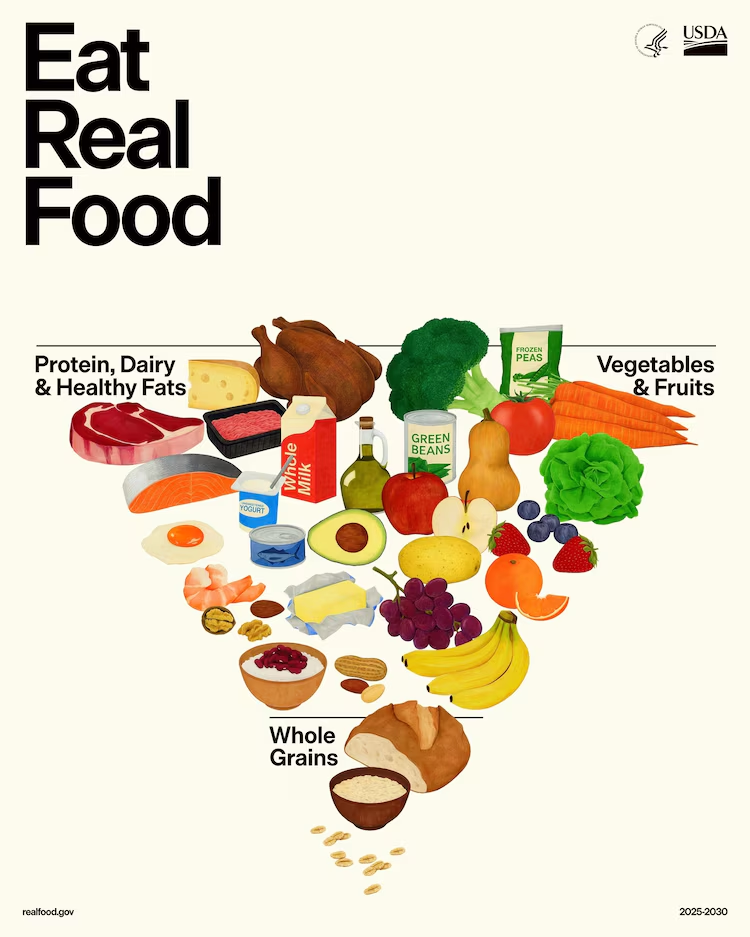
While many comparisons are being made with the old food pyramid and the new one, it’s been several years since the old food pyramid was used. The most recent recommendations were found at myplate.gov, with the visual of a plate. The simple version was that half the plate should be fruit and veggies, a quarter from whole grains, and a quarter from lean proteins. The graphic also included a cup of low-fat dairy with your plate.
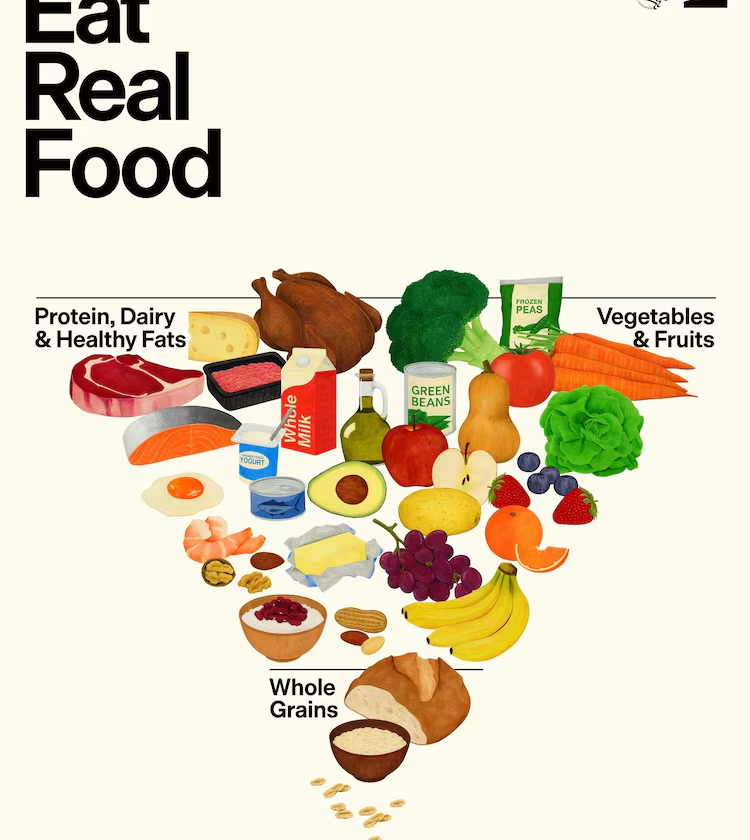
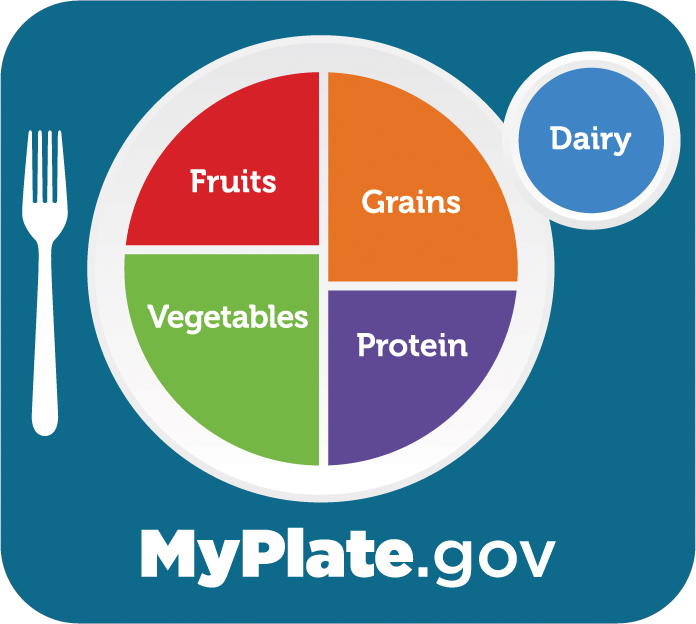
This new graphic reverts back to a pyramid, emphasizing protein and full-fat dairy and fruits and vegetables, with a smaller amount of whole grains.
Let’s dive in deeper to the actual dietary recommendations themselves.
Dietary Guidelines for America: 2020-2025 vs. 2025-2030
The updated document is much shorter than the previous document (10 pages compared to the prior 164!). It contains much of the same information, though with slightly different emphases (and a little extra political flair — see realfood.gov). Both documents recommend getting plenty of fruits & veggies and eating whole, unprocessed foods. Some sections, however, contain significant changes.
Dairy Recommendations
One of the largest areas of change is the recommended dairy. Recommendations are still 3 servings a day, but the new guidelines recommend full-fat dairy as opposed to fat free or low-fat dairy. The old recommendations also allow for calcium-fortified dairy alternatives, while the new recommendations do not.
Protein Recommendations
The new food pyramid places extra emphasis on protein, upping the recommendation from 0.8 grams per kilogram of bodyweight to 1.2-1.6 grams per kilogram of bodyweight. It also emphasizes eating protein from a variety of animal sources, including red meats and full-fat dairy. The MyPlate recommendations, on the other hand, promoted lean protein from a variety of sources.
Fat Recommendations
While the new guidelines promote eating “healthy fats,” they don’t define what that is. And they seem to include all fats in this, promoting things like red meat, full-fat dairy, butter and beef tallow in addition to more traditional healthy fat foods like nuts and avocados.
The former guidelines, however, recommend prioritizing unsaturated fats and limiting foods high in saturated fats. Interesting enough, both guidelines recommend that we limit saturated fat to 10% of our total daily calories. The new guidelines suggest we do this by limiting highly processed foods.
Whole Grains Recommendations
The old guidelines recommended that at least half the grains you eat be whole grains. On the other hand, the updated recommendations simply invite us to “prioritize fiber-rich whole grains” and “significantly reduce the consumption of highly-processed, refined carbohydrates.”
Added Sugar Recommendations
Both guidelines acknowledge the harms of added sugar and recommend avoiding it. The old guidelines, however, allowed for 12 teaspoons of sugar per day (about 50 grams). The new guidelines, on the other hand, recommend a max of 10 grams of sugar per meal. (I’m assuming this translated to about 30 grams of sugar per day.)
What to Limit
Alcohol – While both guidelines recommend limiting alcohol, the new guidelines do not provide a specific recommendation. The old guidelines suggest 2 drinks or less for men and 1 drink or less for women.
What are the changes in the new food guidelines?
Overall, the changes include increasing the recommended protein, decreasing recommended sugar, and increasing recommended whole grains. The fat section is particularly different, promoting foods like red meat and full fat dairy that were previously discouraged.
| MyPlate (2020-2025) | RealFood (2025-2030) | |
| Dairy | -3 servings low-fat or fat-free dairy or dairy alternatives | -3 servings full fat dairy -dairy alternatives not mentioned |
| Protein | –0.8 grams per kilogram of bodyweight -Eat variety of lean proteins, avoiding red meats or full-fat dairy | –1.2-1.6 grams per kilogram of bodyweight -Eat variety, including all meats, dairy, beans, etc. |
| Fat | -prioritize foods with unsaturated fat (fish, nuts/seeds, avocados, etc.) –limit saturated fat to 10% of daily calorie intake | -eat healthy fats, including red meat, butter, beef tallow, etc. (high in saturated fats) –limit saturated fat to 10% of daily calorie intake |
| Grains | -make half your grains whole | -prioritize high-fiber whole grains |
| Added Sugar | -limit added sugars to 10% of daily calorie intake (about 50 grams) | -no amount of added sugar is healthy -limit to no more than 10 grams per meal (about 30 grams per day) |