Plenty of blogs, books, YouTube channels, and social media influencers will tell you how to eat healthy. But it seems like everyone has different, sometimes even contradictory opinions about what healthy eating really means.
So what does it mean to eat healthy? Here are a few principles I’ve found that are backed up by many sources, including government and research institutions, doctors, and dietitians.
What healthy *is*
More fruits & veggies
Some nutritionists or health professionals disagree about dietary recommendations. But the one thing that is consistent is eating more vegetables!
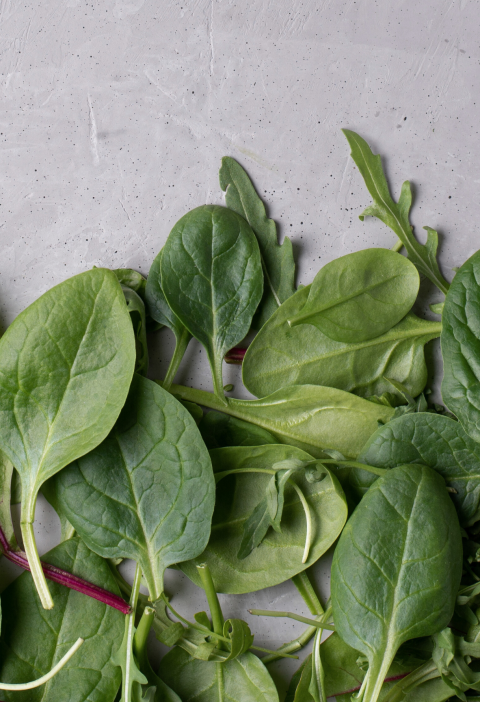
The average American eats well below the recommended amount of fruits and veggies per day. In fact, in 2019 the CDC said only 10% of surveyed adults in the US got enough vegetables each day! How many fruits and veggies should you aim for? The US Department of Agriculture recommends 2-3 cups for adult women, and 3-4 cups for adult men.
If you’re not one to measure out your vegetables, try the plate method! The USDA recommends that half your plate should be made up of fruits and vegetables. The American Diabetes Association takes it a step farther, recommending that half your plate be non-starchy vegetables (think salads, broccoli or cauliflower, etc.).
So try filling up half your plate with fruits and veggies and see what happens! When your body is full of the good stuff, you won’t have as much room for the junk food. (Try creating your custom plate here!)
Need some help adding more veggies to your diet? See my article here for ideas!
Good quality protein
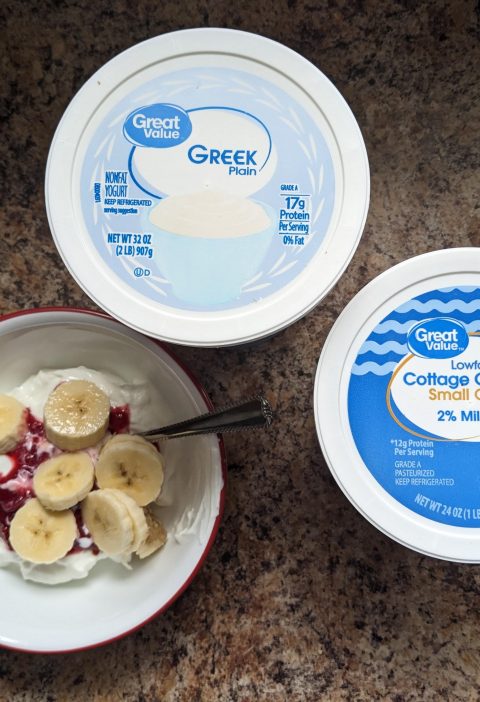
Our bodies need protein to function, whether it’s to build muscle or to keep our immune system running. While the amount is not always agreed upon, most doctors and nutritionists recommend lean protein — meaning foods that are high in protein but low in saturated fats and cholesterol.
Lean protein includes food like poultry, lean beef or pork, beans or legumes, and low-fat dairy products. Other protein sources such as fish or tofu are higher in fat, but these are healthy fats that your body needs.
For more information on meat-free protein options, see my article here!
Complex carbs
While carbs (or carbohydrates for my science nerds) may get a bad rap, our bodies need carbs to provide us with energy! But just like protein, the quality of carbs you eat matters. And as with almost every food, carbs should be part of a balanced diet, eaten mindfully. As I mentioned back in our veggie section, the USDA MyPlate program recommends that a quarter of your plate be healthy carbs.
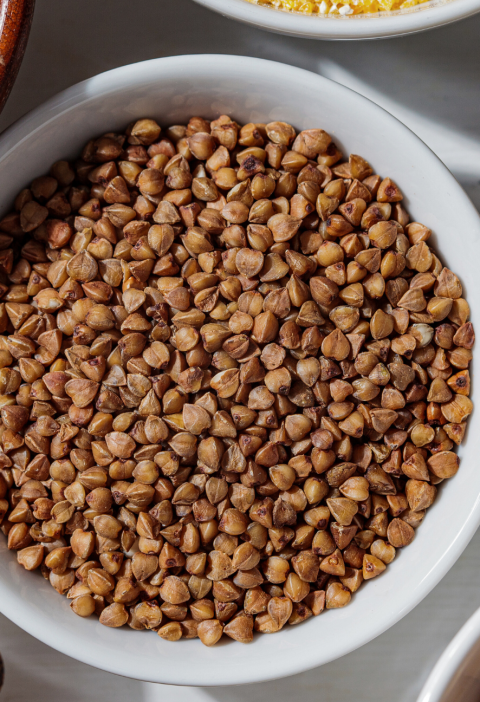
So how do we ensure we’re eating good quality carbohydrates? Look for carbohydrates that come from whole foods and are less processed, plus carbs that are rich in vitamins or minerals. This means choosing the brown rice instead of white (for more fiber), or going for the sweet potato rather than the white potato (for more nutrients). These carbs will also usually be complex carbs, meaning they break down more slowly for a longer-lasting energy boost. Focusing on complex carbs will help your blood sugar stay steadier rather than the dramatic spikes that can come from refined carbohydrates.
Healthy fats
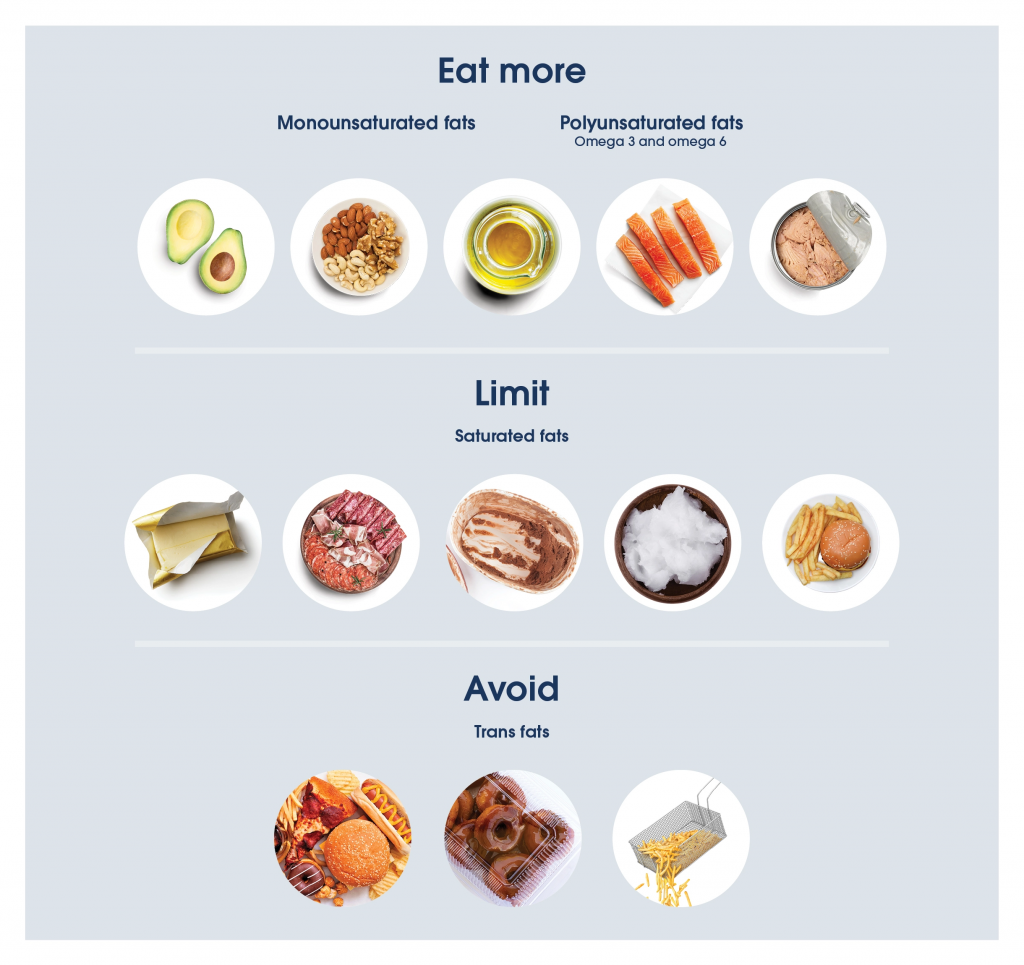
Our body needs fat, but like protein, the kind of fat we eat matters. Consuming too many saturated fats can increase risk of heart disease. On the other hand, consuming more unsaturated fats can help improve heart and brain health.
Unsaturated fats are found in foods like nuts, seeds, fish, and some oils. Fats are very calorie dense, so we don’t need a huge amount. But by swapping out some foods that contain saturated fats for those with unsaturated ones, we can fuel our bodies right.
Less added sugar / processed food
I like to primarily focus on the foods we should eat rather than cutting things out. But for our overall health, there are some things that we really should eat in moderation. And depending on your specific health needs, you may need to cut out altogether.
Added sugar is particularly problematic. The average American consumes way more than the recommended max of 50 grams per day. And consuming too much adding sugar increases risk of tooth decay, type 2 diabetes, heart disease, and more.
For ideas on reducing added sugar in your diet, check out my article here.
Balanced diet
Our bodies need a variety of different foods in order to function properly. And if we eat too much of any one type of food, this usually leads to problems. (For example, our bodies need fat to help us feel full and provide energy. But if we eat too much, we’re likely to have trouble maintaining a healthy body weight.)
I’m also a big proponent of moderation. For most people, having fun foods (foods without much nutritional value) periodically can be part of a healthy diet and lifestyle. This will help your diet be more realistic and become a lifestyle rather than a temporary restriction.
What healthy *isn’t*
Cutting out entire food groups
Sometimes for the sake of being “healthy,” we may try diets that greatly limit (or even eliminate) foods. This includes things like paleo, keto, low-carb, vegan, and more. In most cases, if we cut out a whole food group, we are likely to miss out on essential nutrients. While there may be some health reasons for greatly limiting entire food groups (like a diabetic limiting carbohydrates), the vast majority of us shouldn’t follow this pattern.
Not only is this unhealthy, but it also can make a diet unsustainable. If your “healthy” diet requires giving up any kind of carbohydrate, it will be much harder to maintain. On the other hand, maintaining a balanced and varied diet will help you continue in a healthy lifestyle.
Expensive “super foods” & trendy processed health foods
Often in my Y healthy living courses, people talk about how expensive it is to eat healthy. What they really mean by this is that eating organic XYZ costs a lot, or buying the latest fancy protein bar. However, when we swap out processed foods and add more whole foods, this can actually be quite affordable. (For more on this, see my article about how to afford eating veggies.)
Ultimately, there is no one fancy super food to buy or health store to shop at in order to have a healthy diet. It’s the plain and simple stuff like eating fruits and veggies or getting high quality protein/carbs that makes the biggest difference!
Ultra strict diets
While some ultra-strict diets may technically be healthy for your body, eating is not just physical. How we think about food and what we eat greatly affects our mental health. For most people, following an ultra strict diet can be associated with poor body image and eating disorders. (There’s a relatively new eating disorder in the diagnostic manual called orthorexia nervosa: an obsession with only eating healthy food.)
So yes, we should try to fuel our bodies with healthy foods. But the best diet is one you can be consistent with, that will help your body and mind feel their best.
Find your healthy
While there are great general nutrition guidelines out there (like the USDA’s Dietary Guidelines for Americans), what “healthy” looks like will be different for everyone. (Talk with a healthcare professional or registered dietitian for more personalized nutritional guidance.) As you do your best to fuel your body well, find what helps your mind and body feel good. Because true health is about more than looking toned or following a specific diet; true health is about having a body and mind that do what you need them to do.